A full roof replacement is a significant project for any property owner. While repairs can often extend the life of a roof, there comes a point where replacing the entire structure is the most reliable long-term solution. For homeowners in Ely, Cambridgeshire, understanding what the process involves can make the experience far less daunting.
At Ely Roofing Repairs, we believe informed homeowners make confident decisions. Below is a clear guide to what typically happens during a full roof replacement and what you can expect at each stage.
Initial Roof Assessment and Planning
Before any work begins, a thorough inspection is carried out. This allows roofing specialists to assess the condition of the existing tiles or slates, underlay, battens and supporting timbers.
Identifying Structural Concerns
During the assessment, attention is given to:
- Signs of timber rot or decay
- Sagging rooflines
- Damaged or deteriorated underlay
- Failing flashing around chimneys and roof junctions
In Ely, Cambridgeshire, exposure to wind, rain and seasonal changes can gradually weaken roofing materials. A detailed inspection ensures that all underlying issues are identified before replacement begins.
Choosing Suitable Materials
The next step involves selecting appropriate materials that suit both the property style and local conditions. Whether replacing concrete tiles, slate or another pitched roofing system, compatibility with the building’s structure is essential for long-term performance.
Professional guidance ensures the chosen materials provide durability, weather resistance and visual harmony with neighbouring properties in Ely.
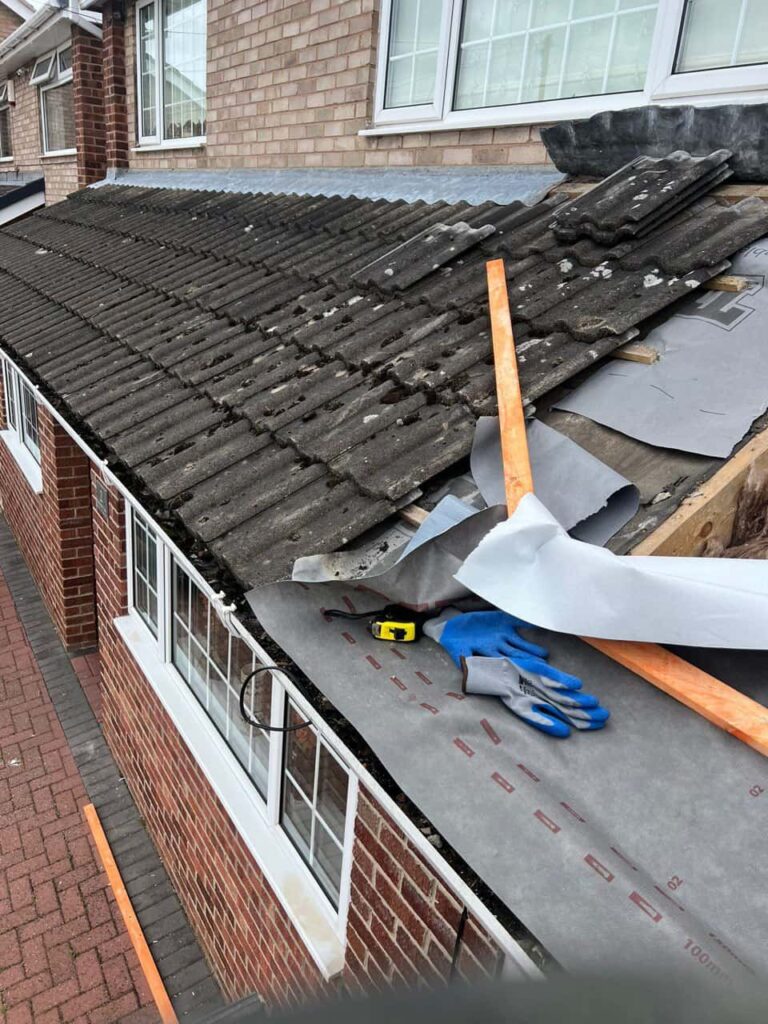
Removing the Existing Roof Covering
Once preparation is complete, the existing roof covering is carefully removed. This stage reveals the full condition of the roof deck and supporting framework.
Safe and Controlled Strip-Out
The removal process typically includes:
- Taking off old tiles or slates
- Removing worn battens and underlay
- Clearing debris from the roof structure
This stage is handled methodically to prevent damage to the surrounding structure and ensure the property remains secure throughout the project.
Inspecting the Roof Structure
With the covering removed, the exposed timbers are inspected thoroughly. Any compromised sections are addressed before the new roof system is installed. This step is vital, as installing new materials over weakened supports would compromise the longevity of the replacement.
Preparing the Roof for Installation
Before new tiles or slates are laid, the roof must be properly prepared to create a stable, weather-resistant foundation.
Installing New Underlay
A high-quality roofing membrane is fitted across the roof structure. This underlay acts as a secondary barrier against moisture and wind-driven rain, adding an extra layer of protection.
Fitting Battens
Timber battens are then installed horizontally across the roof. These provide the secure fixing points for tiles or slates and ensure consistent alignment and spacing.
Accurate installation at this stage is critical for both performance and appearance.
Installing the New Roof Covering
With the base layers complete, the visible roofing material is installed.
Laying Tiles or Slates
Tiles or slates are carefully positioned and fixed according to the roof’s pitch and design. Consistent alignment ensures a clean, uniform finish while also providing reliable weatherproofing.
Replacing Flashing and Roof Details
Lead flashing around chimneys, valleys and abutments is either renewed or replaced to ensure watertight junctions. Ridge tiles and verge details are securely fixed to complete the structure.
In Ely, Cambridgeshire, proper attention to these finishing elements is particularly important, as wind and rain can quickly exploit weak points.
Final Checks and Site Completion
After installation, the roof is inspected to ensure every component is secure and correctly aligned.
Quality Control Inspection
This final review checks:
- Tile positioning and fixings
- Ridge and verge stability
- Flashing integrity
- Overall roofline appearance
The aim is to confirm that the new roof provides full protection and a professional finish.
Clearing the Site
All materials and debris are removed from the property, leaving the exterior tidy and safe.
Why Professional Expertise Matters
A full roof replacement is not simply a cosmetic upgrade. It involves structural evaluation, weatherproofing knowledge and precise installation techniques. Mistakes at any stage can reduce the lifespan of the new roof or lead to preventable issues.
Ely Roofing Repairs approaches every full roof replacement in Ely, Cambridgeshire with careful planning, skilled workmanship and attention to detail. Our goal is to provide homeowners with a roofing system that performs reliably for many years.
Conclusion
A full roof replacement involves much more than removing old tiles and fitting new ones. It includes structural assessment, careful preparation, installation of protective layers and precise finishing work to ensure long-term weather resistance.
For homeowners in Ely, Cambridgeshire considering a roof replacement, understanding the process can provide reassurance and clarity. If your roof is showing signs of age or recurring problems, Ely Roofing Repairs can provide a detailed assessment and professional guidance to help you plan the next steps with confidence.
Call us on: 01353 881 098
Click here to find out more about Ely Roofing Repairs
Click here to complete our contact form and see how we can help with your roofing needs.